
The start of spring is one of the most important times of the year for bees. After the long winter months, these insects leave their hives weakened and with limited food supplies. It is at this very moment that the first flowering plants are of vital importance, providing them with the energy they need to survive and thrive. The goat willow deserves special attention – an unassuming tree that plays a key role in the ecosystem.
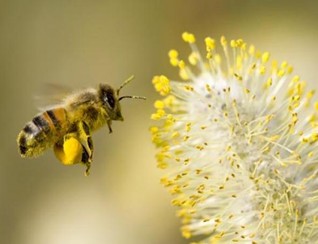

The goat willow blooms very early, often as early as late February or early March, when most plants are still dormant. Its characteristic ‘catkins’ are a rich source of pollen and nectar – two essential components for bees. Pollen provides the protein needed to raise young bees, whilst nectar is a source of energy. This allows bees to quickly regain their strength after winter and begin intensive work in the hive.
However, the importance of this plant extends beyond individual insects. The rate of development of entire bee colonies depends on its availability. If there is a lack of suitable forage in early spring, colonies develop more slowly, which can have consequences later in the season – both for honey production and for the pollination of cultivated and wild plants.
The benefits of this plant are not limited to supporting pollinators. It is from its nectar that the unique willow honey is produced. It is mainly harvested from the white willow and its hybrids, which grow commonly on the edges of forests, wasteland and along riverbanks. This honey can range in colour from golden yellow through orange to amber, sometimes with a delicate greenish tinge. It has a mild flavour with a noticeable herbal aroma, and its characteristic feature is natural crystallisation in the form of coarse crystals. Willow honey is not only a product with excellent flavour, but also a valuable ingredient that supports health. It contains vitamins, organic acids and coumarin compounds, which have anti-inflammatory, anti-allergic and anti-coagulant properties. Regular consumption can strengthen the body, particularly during periods of fatigue and exhaustion – both physical and mental.
Experts emphasise that in the face of climate change and environmental transformation, the role of such early-season plants is becoming even more important. We are increasingly seeing situations where periods of warming alternate with sudden cold snaps, disrupting the rhythm of nature. In such conditions, access to stable food sources, such as willows, can be crucial to the survival of many bee colonies.
That is why there is a growing awareness of the need to support pollinators by planting honey plants. The goat willow is particularly valuable because it does not require complicated care, yet brings enormous benefits to the environment. Its presence in gardens, parks or rural areas is a simple yet effective way to support bees. Although we often pay little attention to them, it is plants such as the goat willow that form the foundation of nature’s functioning. They provide bees not only with food, but also with a chance for a good start to the new season – and much more depends on their condition than one might think.
Sources:
- Miód wierzbowy – Pasieka Bartnik
- (13) TAKdlaPszczół – 🌿 Wierzba iwa – ratunek dla pszczół na wiosnę!… | Facebook
- Wierzba Iwa – Salix Caprea 50/80 cm | Sadzonki miododajne
- miód wierzbowy – Wcinaj miód!
- Słowo o wierzbach – Pasieka24 – portal dla pszczelarzy z pasją
- Pszczoły czekały na tę roślinę. Daje im kluczowy start w sezonie
- Wierzba iwa- Salix caprea